
SAFEs
 Mercury
The signal was already in the product
About a year after Payment Requests launched, a pattern kept surfacing in research and outreach: customers were funding SAFEs through payment links. They had taken the simple request-for-money primitive and aimed it at seed investing.
Around the same time, Immad had floated the idea in company Slack — let people send SAFEs from Mercury, “kind of an invoice but for seed investing.”
It took over a year to come back to the idea. In mid-August 2023, we launched SAFEs by Mercury: our first true business-graph play, extending Payment Requests into a smarter way for early founders to raise funds.
Launch and learn
The effort ran on a team philosophy I’ve called “launch and learn”: ship a real, end-to-end feature silently and early, then gather targeted feedback from the first people who touch it. Real usage creates the feedback that shapes both the immediate roadmap and the longer one. When it works, the product compounds toward a fuller system shaped by customers rather than by the original spec.
If we hadn’t been paying attention to what customers were already doing with Payment Requests, we would have missed the chance to build SAFEs the way we did.
The mess underneath
When Y Combinator introduced the SAFE in 2014, the standardized docs took enormous friction out of early rounds. But actually funding a SAFE was still a patchwork: terms negotiated over email, signed PDFs passed through DocuSign, wire and ACH details shared over email, and a cap-table spreadsheet tracking valuation caps, discounts, and addenda for every investor and SAFE.
Add up the email threads, the signing infrastructure, the legal consultation, and the spreadsheet wrangling, and raising on SAFEs was complicated — and expensive. There had to be a better way.
One table to run the round
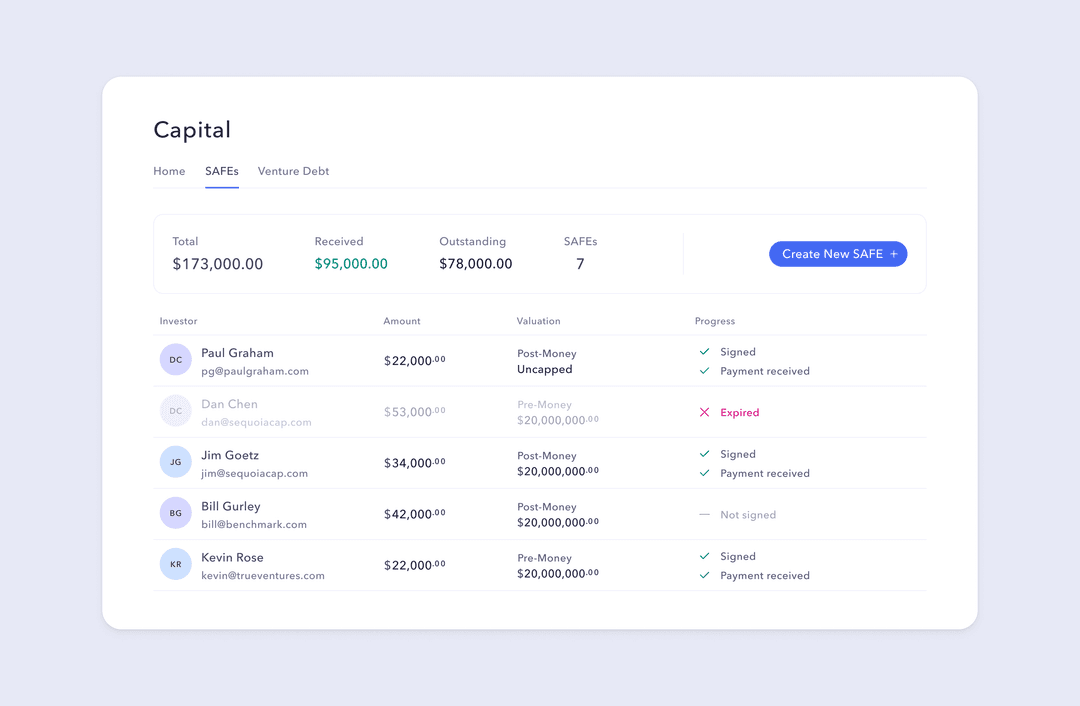
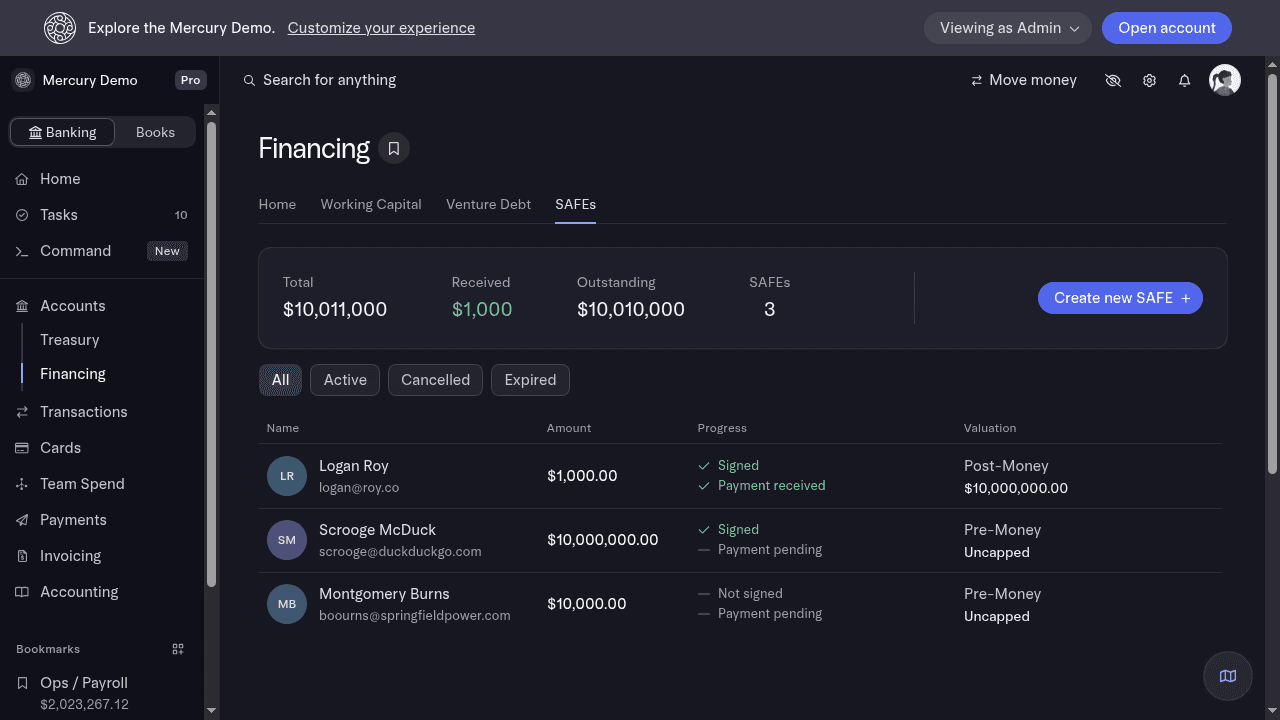
The logged-in experience centers on a SAFE table inside the Capital area of Mercury. Founders can spin up a new SAFE in a few clicks, scan the status and terms of every SAFE at a glance, and see received-versus-outstanding totals that show how the whole round is progressing. We kept the first version deliberately simple, while leaving room for richer round management later.
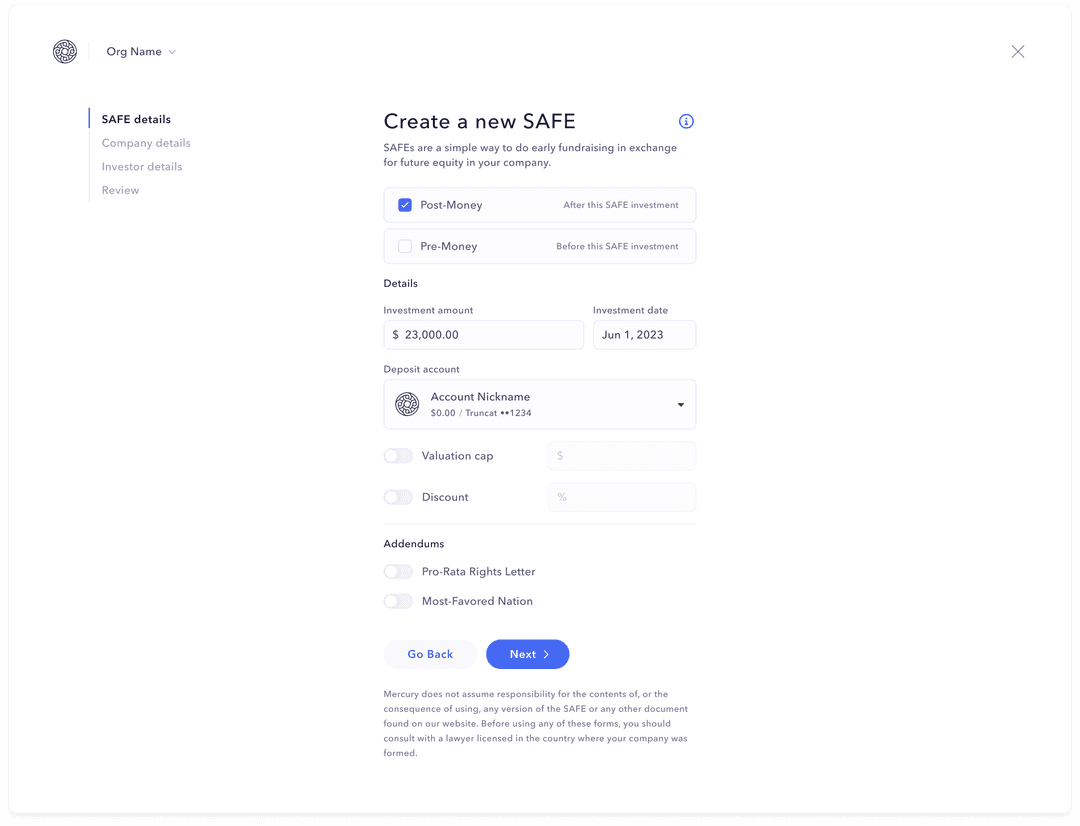
Creating a SAFE is broken into focused sections — terms, company details, investor details — so each step asks for one kind of thinking at a time.
Signing without the shuffle
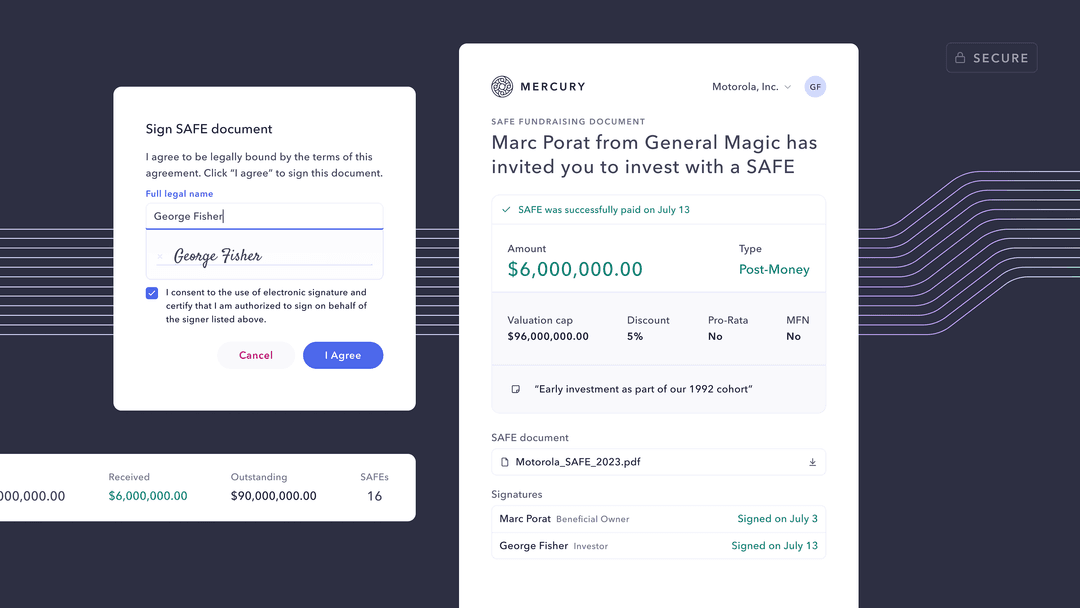
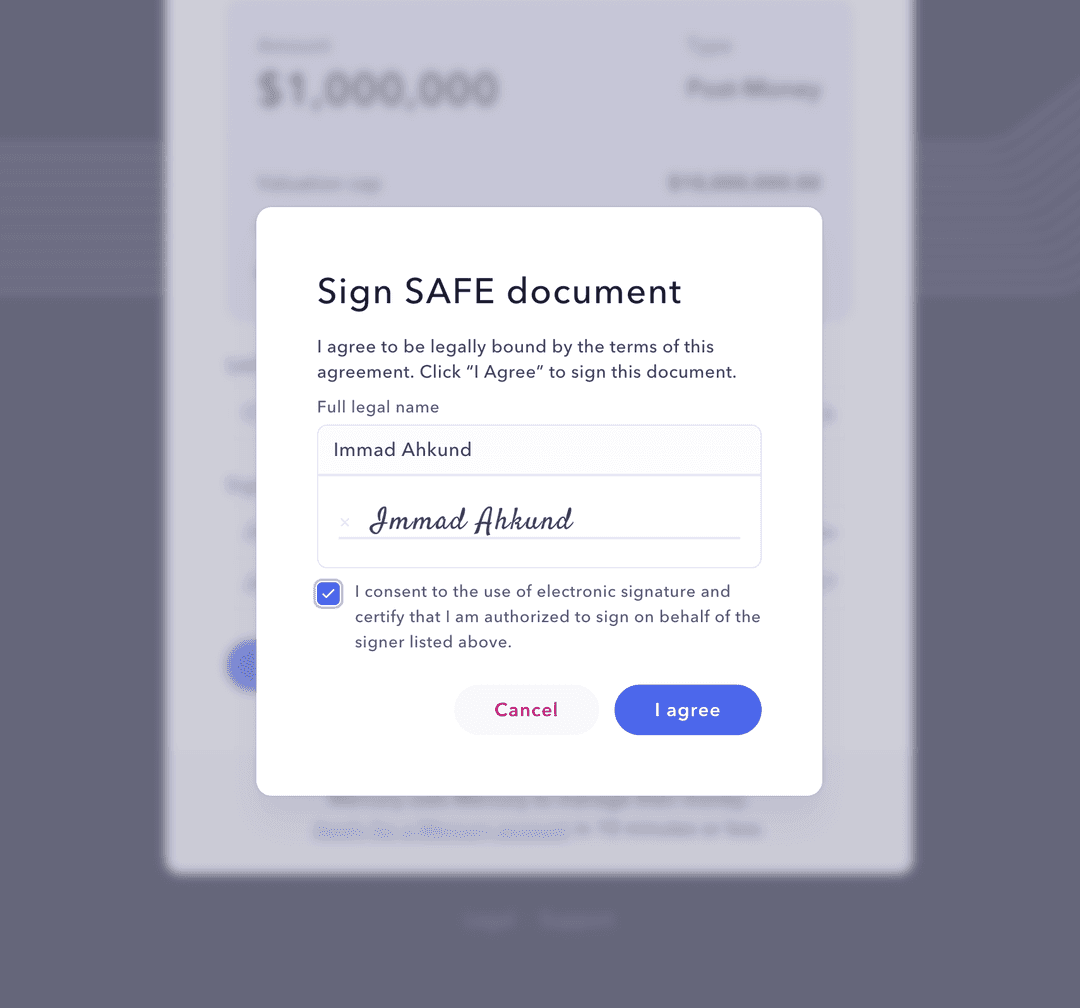
Signing had to be simple and legally binding for both sides, without sending either founders or investors to a third-party tool. Founders signed in the dashboard; investors signed through a public URL. We landed on a visual metaphor that renders your signature in script typography as you type — paired with a consent checkbox and CTA language that makes the legal acceptance unmistakable for both parties.
Email is part of the product
Transactional email is often the invisible part of product design, but for SAFEs it’s load-bearing: both parties need to be notified at every stage — creation, signing, funding, money movement. We devoted an entire section of the project file to the emails triggered along the way, each one designed to keep the raise moving without another thread to manage.
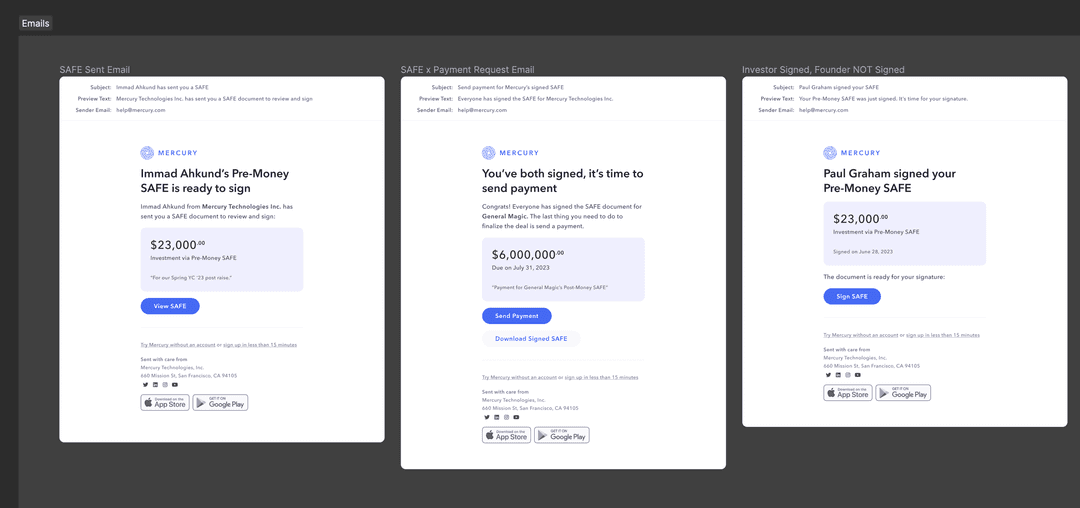
The throughline: every stage of the process was built to collapse the sprawl — fewer threads, fewer tools, one place to raise an early round.

Impact
SAFEs by Mercury launched an end-to-end fundraising flow inside the bank: founders could create, send, sign, track, and fund a SAFE without stitching together separate documents, signature tools, email threads, and payment instructions. Founders across Y Combinator’s portfolio adopted it, the YC team recognized the product, and the flow drove meaningful new deposits into Mercury.
This case study is adapted from my essay Making a SAFE bet — behind the scenes building SAFEs by Mercury.