
The Mercury demo
 Mercury
Immad Akhund: The Art of Irrational Effort
Dialectic by Jackson Dahl
The beginning
Choosing a finance tool is a core infrastructure decision. It shapes how a company scales, how money moves, and what the finance team touches every day. And yet, when our CEO and VP of Product compared notes, they kept landing on the same strangeness: for decisions this significant, you almost never get to see the product before you commit to it.
What if anyone could see and use Mercury before making that choice?
I joined Mercury as a product designer in late 2021. One of my first projects was turning that question into a product: helping take our internal demo environment public.
Working in the open
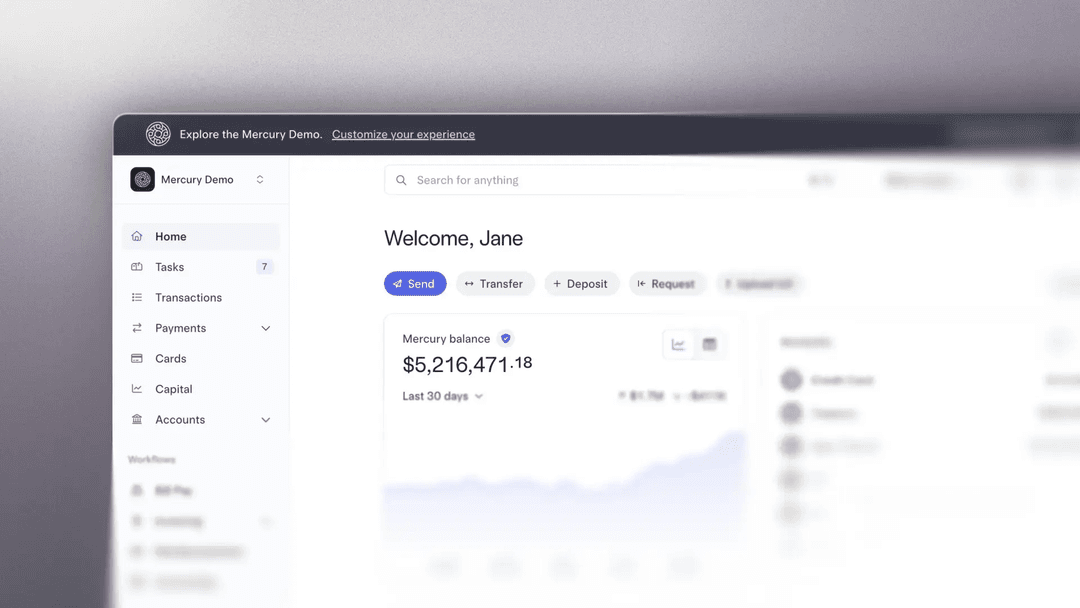
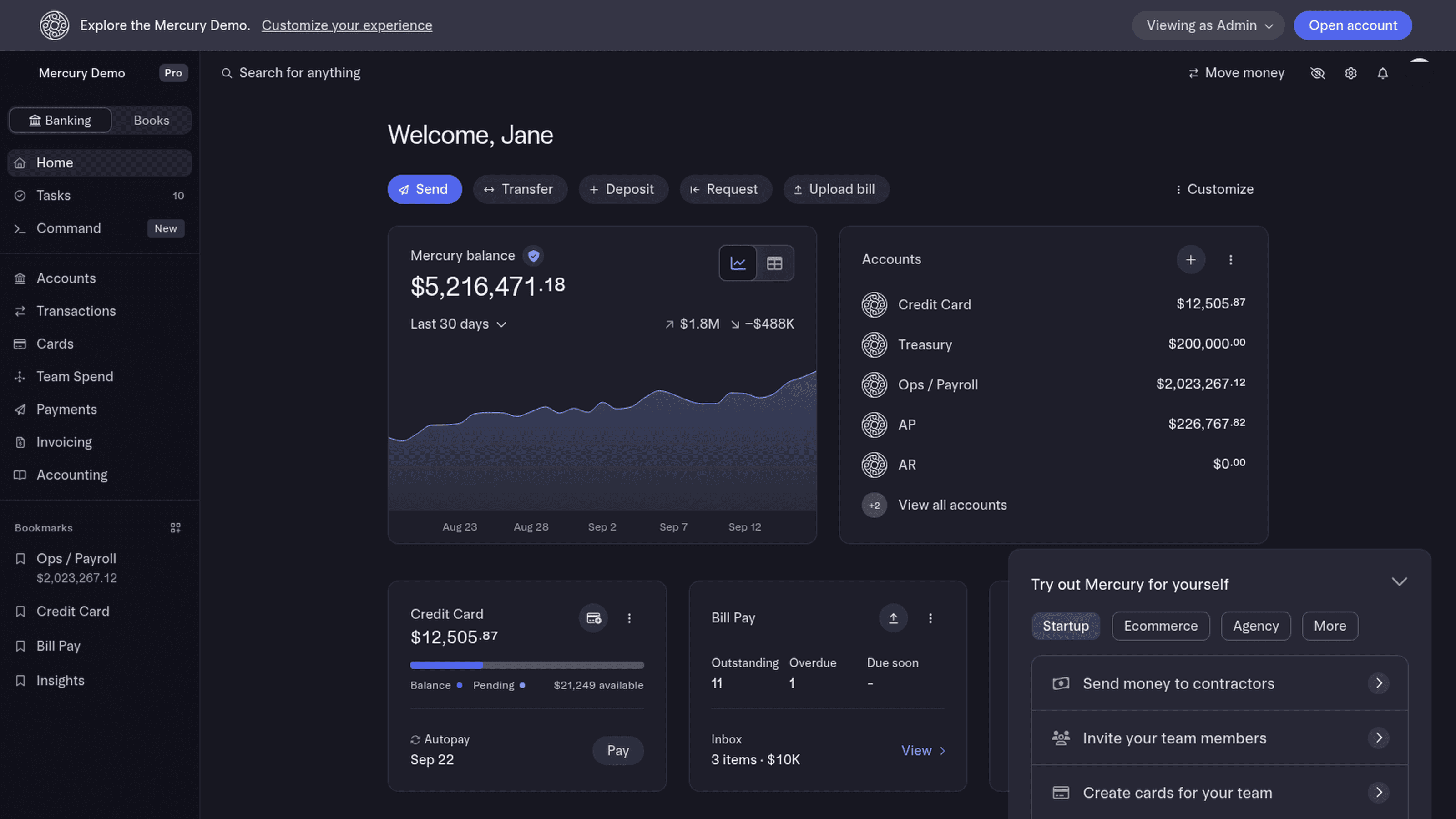
The origins were pragmatic. Mercury had built an internal tool called Mock, where engineers could test live experiences by plugging variables into a URL to simulate different user states. It became the foundation for something bigger: a live demo that always reflected the current state of the product, not a staged snapshot.
Showing the real product, unvarnished, cut against every convention. Demos are supposed to be idealized. Ours would show the warts: features mid-polish, first public iterations, rough edges and all. Anyone could try it, screenshot it, copy it.
But we weren’t selling an idealized version of Mercury; we were selling what it actually was. Any evidence that the product resonated was valuable, and giving potential customers control over their evaluation mattered more than preserving a polished first impression. So we doubled down: fully public, no contact info required, no gates whatsoever.
Taking it live
My role was to help take the demo public and iterate on the core Demo bar that framed the experience. Because the demo reflected the live product, I did not shape most of the underlying interface; the work was in supporting a safe, useful way for anyone to explore what Mercury had already built.
Letting the product speak for itself
Once it was live, the impact showed up fast, inside and outside the company.
Externally, an ungated demo turned out to be a very busy place. Far more people engaged than we expected, and from day one we watched people move through the funnel into the product faster. The shape of our sales conversations changed too. As Mercury’s VP of Revenue put it, founders started arriving already knowing Mercury could handle their specific use case, so calls skipped the feature tour and went straight to the nuanced questions about their business. That made the calls a better use of everyone’s time and gave the sales team a much clearer signal of fit.
Seeing the real product also gave people the confidence to decide on their own. About a year after launch, a customer found the demo, evaluated Mercury, signed up their business, and deposited $50 million without help from our team.
Internally, the open demo changed how we built. Knowing the product was always on display pushed teams to go deeper on the interface and stay laser-focused on user needs. Paired with a ship-fast-and-learn mindset, that pressure produced entirely new Mercury features built from the ground up: recipient invites, SAFEs, downloadable formation docs.
Unexpected constituencies
A few years in, the demo started mattering to people we never designed it for.
Candidates began referencing it before interviews. Some told us it was what made them want to work at Mercury: they could see exactly what they’d be signing up to build. Regulators started using it to understand the product — what shows up where and when, what making a payment actually feels like. Our compliance and policy teams have shared it with policymakers.
Different audiences, same underlying question: how do you understand what you’re really working with, without relying on a company’s own narrative? The open demo lets each of them answer that on their own terms, not just ours.
Taking the leap
Launching this way meant giving up control over how Mercury was first experienced. Anyone could see everything we were building, including features in their earliest and roughest forms.
But betting on transparency was betting on our customers. Founders make complex decisions every day; we trusted them to evaluate the product and decide for themselves whether it fit. That trust is what the demo is really about — not our assumptions about what businesses need, but making room for all kinds of builders to find their own path forward.
Impact
The public demo changed how people evaluated Mercury. Prospects arrived at sales calls with sharper questions, one customer evaluated the product independently and deposited $50 million, and the same open surface became useful to candidates, regulators, policy teams, and the teams building Mercury itself.
This case study is adapted from my essay Designing in the open — the story of taking Mercury’s internal demo public.